Key Takeaways:
Choosing the right wheel loader requires evaluating how the machine will be used day to day, including primary tasks, material characteristics, site constraints and operating demands. Buyers should match wheel loader size to typical jobs, confirm safe operating load rather than tipping load, select bucket types and capacities that suit material behavior, and account for site conditions that affect traction and power delivery. Attachments, ease of daily operation and operator visibility should also be evaluated to ensure the wheel loader performs safely, consistently and predictably under normal working conditions.
Wheel loaders are extremely versatile machines that can be used to carry many different types of material in a wide range of applications. But the varied uses of wheel loaders make it critical to be very selective when choosing the right machine for your jobsite. The right wheel loader will help you optimize performance and efficiency, while choosing a machine that is a poor fit for your needs can eat into your profits and extend the duration of your project.
The following guide will help you understand the important criteria that should guide this decision.
The right wheel loader for your jobsite will depend on what you actually need the machine to do. Before evaluating the size, capacity or features of different options, you need to clearly define the work your wheel loader will perform on a regular basis. This keeps the selection process grounded in real job requirements.
Start by identifying the primary tasks the wheel loader will handle. Loading trucks, moving material across the site, building or reclaiming stockpiles, and general support work will all place different demands on the machine. If you don’t define the primary use, it becomes easy to choose a machine that is poorly suited to the work that matters most.
When clarifying your needs, concentrate on practical factors:
Wheel loader size has a direct effect on how well the machine fits your work. The right size is the one that can handle your typical loads efficiently while still working comfortably within your jobsite limits.
Make sure to focus on the material you move most often, not the largest or heaviest load you might handle occasionally. A wheel loader that is oversized for daily work can be harder to maneuver, slower in tight areas and less precise during loading. A machine that is too small may struggle to keep up and spend too much time at the edge of its capability.
Make sure to evaluate physical site constraints in addition to material size. You should consider:
Machine size also affects how the wheel loader interacts with other equipment. The loader must be able to load trucks, hoppers or conveyors at the right height and angle without repeated repositioning.
Tipping load and safe operating load define how much a wheel loader can lift and carry without losing stability. These numbers set the real limits of what the machine can handle safely during normal work.
Tipping load is the point at which the rear wheels begin to lift off the ground. Safe operating load is a lower, more conservative limit that keeps the wheel loader firmly on all four wheels during normal lifting and travel. You should always base decisions on safe operating load, not tipping load.
To evaluate this criterion, focus on:
The correct wheel loader should be able to lift and carry your typical load without operating near its stability limit. This gives your operator consistent control and reduces the need to compensate during loading and travel.
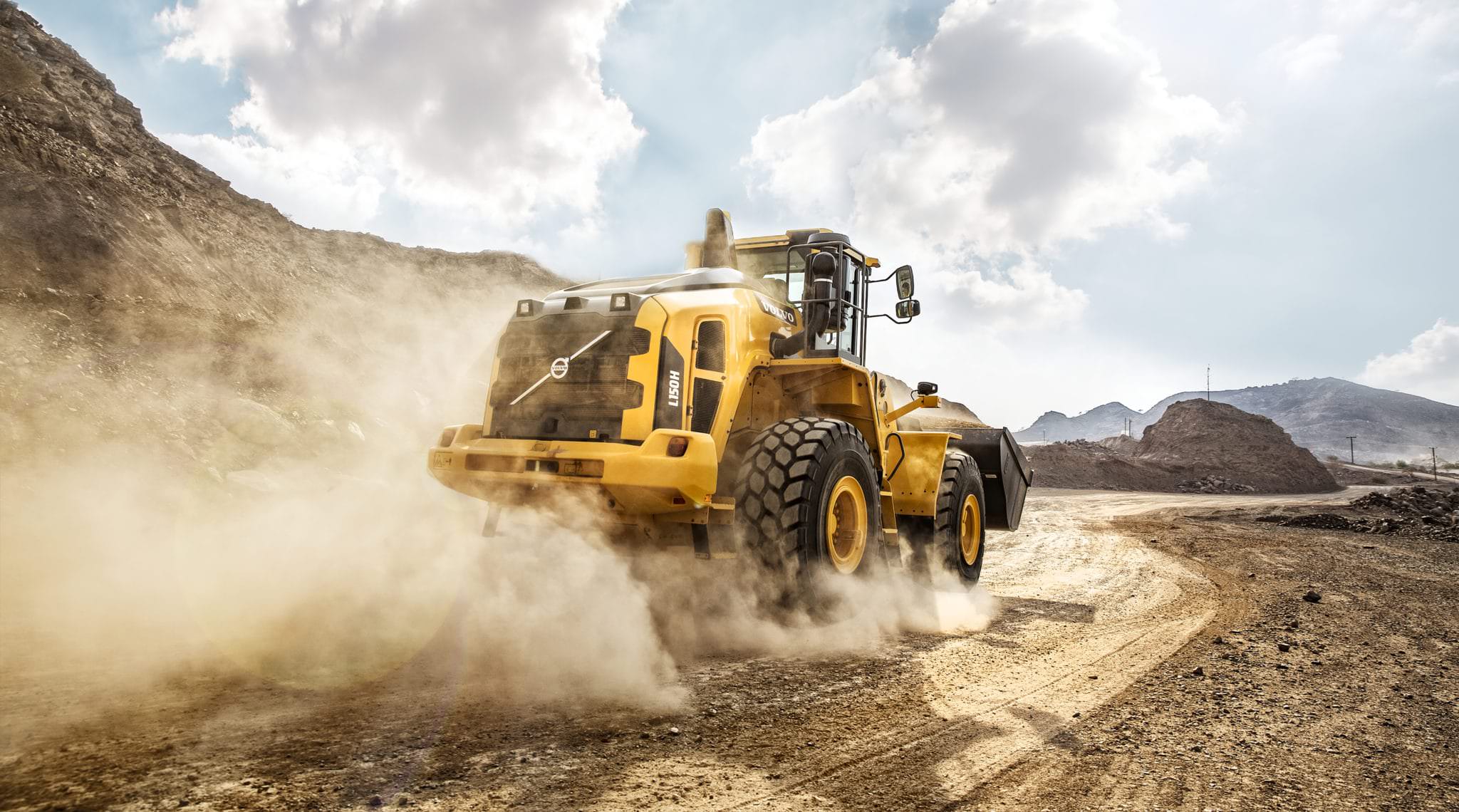
The bucket determines how the wheel loader interacts with material. Choosing the wrong bucket can limit productivity even if the machine itself is properly sized.
General-purpose, light-material and heavy-duty buckets are built to handle materials that behave differently when being scooped, carried and dumped. The bucket type needs to match how the material actually moves. When it doesn’t, the wheel loader may struggle to fill the bucket, spill material during travel or fight the pile instead of loading smoothly.
The bucket capacity must align with the wheel loader’s safe operating load. A bucket that is too large encourages overloading and reduces stability. A bucket that is too small requires more trips to move the same material, which slows the work.
When evaluating buckets, consider:
The powertrain determines how a wheel loader moves, pushes and responds under load. Site conditions should guide this choice more than peak power ratings.
Make sure to evaluate your traction demands when choosing a powertrain for your wheel loader. Soft ground, uneven terrain or loose material require smooth power delivery and controlled wheel slip. Firm, flat surfaces place fewer demands on driveline control but still require consistent response during loading and travel.
You should also account for:
Attachments expand what a wheel loader can do, but they also change how the machine performs. You should confirm that the wheel loader is designed to operate safely and predictably with the attachments you plan to use, not just the standard bucket.
Uptime depends on how easily the wheel loader fits into daily operation. You should evaluate:
Operator needs directly impact consistency and safety, making them an important consideration. A wheel loader that is difficult to see out of, awkward to control or fatiguing to operate leads to reduced productivity over the course of the day.
If you need to upgrade your wheel loader fleet, Power Equipment Company can help. We’ve been the leading heavy equipment dealer in the Rocky Mountain region since 1936, and our team of knowledgeable experts can recommend the right wheel loaders for your specific applications.
We carry a comprehensive line of Volvo wheel loaders to provide you with the finest quality machines available. Our team will discuss your needs in detail and help you evaluate the criteria discussed above to ensure you receive the best possible performance from your new equipment.
At Power Equipment Company, we understand that new equipment isn’t always going to fit your budget. Our extensive line of used wheel loaders will allow you to receive a high-quality, well-maintained machine that is more in line with your price point. If you only need a wheel loader for a one-off job, you’ll have access to the latest Volvo models from our rental fleet.
Contact us today to learn more about our Volvo wheel loaders for sale and rent. Power Equipment Company has branch locations throughout Colorado, New Mexico, Utah, Wyoming and Missouri.
